Updated: 2026-10-20
How to Lower Your Air Conditioning Costs During Utah's Hot Summers
When summer temperatures climb along the Wasatch Front, your air conditioner may run for long stretches. Staying comfortable matters, but so does understanding which habits and home conditions can increase your cooling bill.
There is no single trick that guarantees a specific percentage of savings. Your actual energy use depends on your home, weather, utility rates, insulation, thermostat settings, and the condition of your cooling equipment. Here are practical steps worth considering.
1. Choose a Thermostat Setting You Can Maintain
In cooling mode, setting the thermostat higher when you can comfortably do so generally reduces the amount of work required from your air conditioner. Try small adjustments and consider a schedule that fits when people are home, asleep, or away.
A programmable or smart thermostat can help manage those changes automatically. Avoid repeatedly lowering the setpoint far below your desired temperature: most conventional air conditioners do not cool faster just because the thermostat is set unusually low.
2. Check Your Air Filter and Keep Vents Clear
A heavily clogged air filter can restrict airflow, reduce comfort, and contribute to system problems. Check the filter according to the equipment and filter manufacturer's guidance, and replace it when needed.
Keep supply registers and return-air grilles clear of furniture, rugs, and stored items. Do not close large numbers of supply vents to try to save energy; doing so can affect system airflow and pressure.
3. Reduce Unwanted Heat From Sunlight
West- and south-facing windows can add substantial heat during sunny afternoons. Closing blinds or curtains when direct sunlight hits those windows may make rooms more comfortable. Exterior shading and well-fitted window coverings can help too.
Use kitchen and laundry appliances thoughtfully during peak afternoon heat, and run exhaust fans only as long as needed. These steps will not replace a functioning air conditioner, but they can reduce some of the heat your system has to remove.
4. Pay Attention to Insulation and Air Leaks
If cooled air escapes through gaps around doors, attic penetrations, or poorly sealed ductwork, your air conditioner may have to run longer to maintain the same indoor temperature. Weatherstripping, appropriate air sealing, and adequate attic insulation can improve comfort.
Some issues are easy to spot, such as a worn door seal. Others—particularly duct leakage in attics or crawlspaces—may benefit from professional evaluation. Avoid blocking combustion-air openings or ventilation required by fuel-burning appliances.
5. Give the Outdoor Unit Room to Breathe
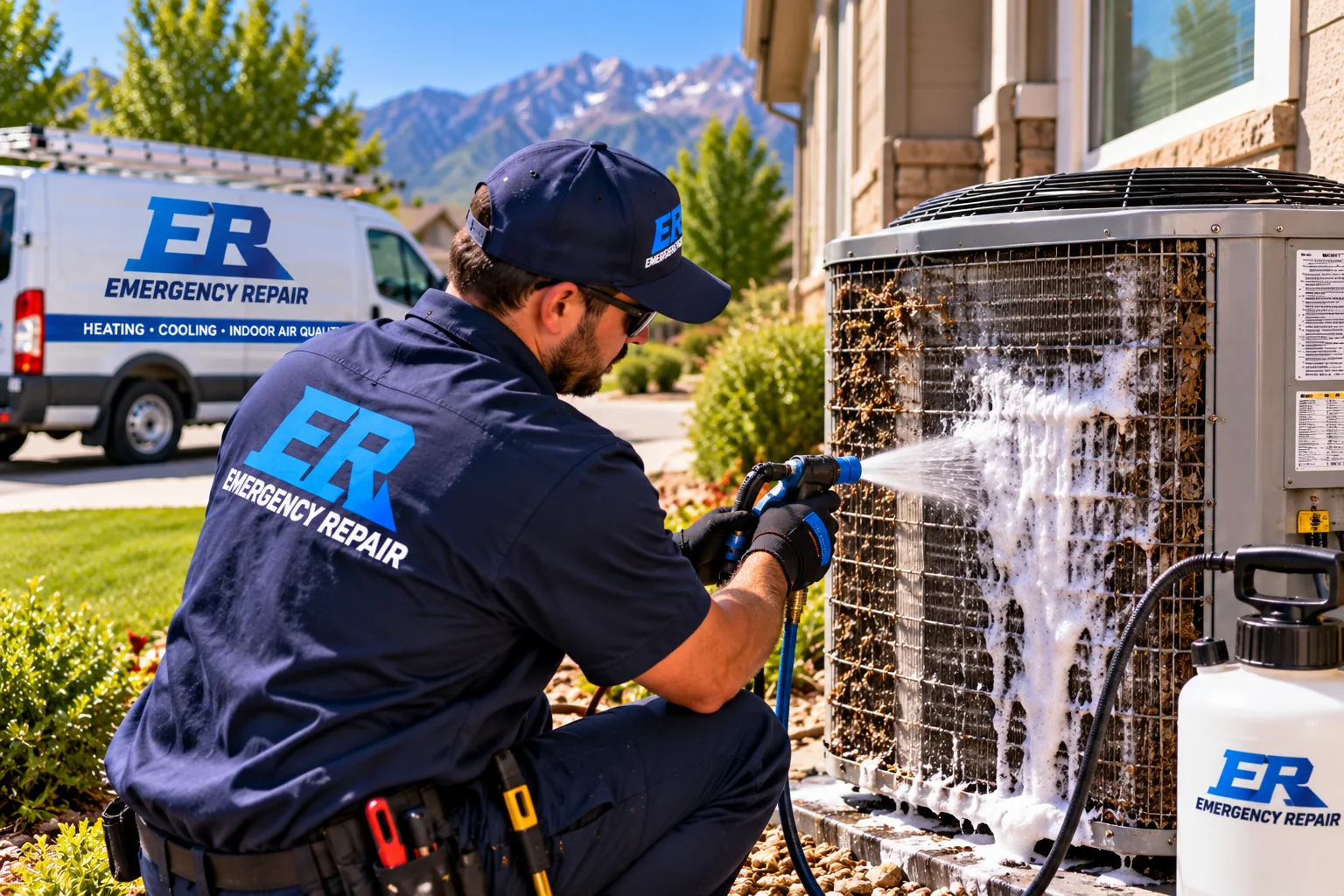
Outdoor condenser units need unobstructed airflow. Keep leaves, yard debris, and vegetation away from the cabinet while following the clearances specified by the equipment manufacturer. Do not cover the unit while it is operating.
If the coil appears dirty, or the system is making unusual noises, have it inspected. Never open electrical compartments, handle refrigerant, or attempt internal repairs yourself.
6. Schedule Maintenance Before Small Problems Become Bigger Ones
Professional cooling-system maintenance can include checking operating conditions, inspecting accessible electrical components, assessing airflow, and identifying signs of wear. Maintenance cannot prevent every failure, but it can reveal problems that affect performance and reliability.
For homeowners in Sandy, Draper, Salt Lake City, and nearby communities, scheduling service before the hottest weeks can be more convenient than waiting until the system stops cooling.
Learn about Emergency Repair's residential HVAC maintenance services →
7. Know When Higher Cooling Costs May Signal an AC Problem
A higher summer bill does not automatically mean your air conditioner is failing. Hotter weather, rate changes, more time at home, and thermostat habits can all increase energy use. However, these signs deserve attention:
- Rooms that no longer reach the thermostat setting
- Noticeably weaker airflow than usual
- Unusual cycling, rattling, grinding, or other new noises
- Water leaks or ice forming where it should not
- A sudden performance change without an obvious explanation
A technician can evaluate the system and explain whether cleaning, repair, or another improvement is appropriate. Replacing equipment is not automatically the best first step.
Explore residential air conditioning repair →
Frequently Asked Questions
Does setting the thermostat much lower cool my house faster?
Usually not for a conventional single-stage air conditioner. It typically runs until the thermostat reaches the requested setting, so an unnecessarily low setting can cause extra runtime. Some variable-capacity systems behave differently.
How often should I replace my AC filter?
There is no universal schedule. Check the filter regularly and follow its manufacturer's instructions; pets, dust, occupancy, and filter design can affect replacement frequency.
Should I close vents in rooms I don't use?
Not without understanding how your duct system was designed. Closing too many vents can increase pressure and reduce airflow through the equipment.
Will a new air conditioner automatically lower my bill?
Not necessarily. Efficiency, correct sizing, installation quality, ductwork, home conditions, and usage all matter. Compare estimated operating costs and repair options before making a decision.
Need Help Keeping Your Home Comfortable?
Emergency Repair provides residential heating, cooling, and indoor air quality services across the Salt Lake City area. If your air conditioner is struggling, we can help diagnose the issue and discuss practical options for your home.
Emergency Repair
Your Comfort Is Our Business.