Updated: 2026-11-11
Want to Control Your Home’s Temperature From Your Phone? You May Not Need a New HVAC System
What Utah homeowners should know before spending thousands on equipment replacement.
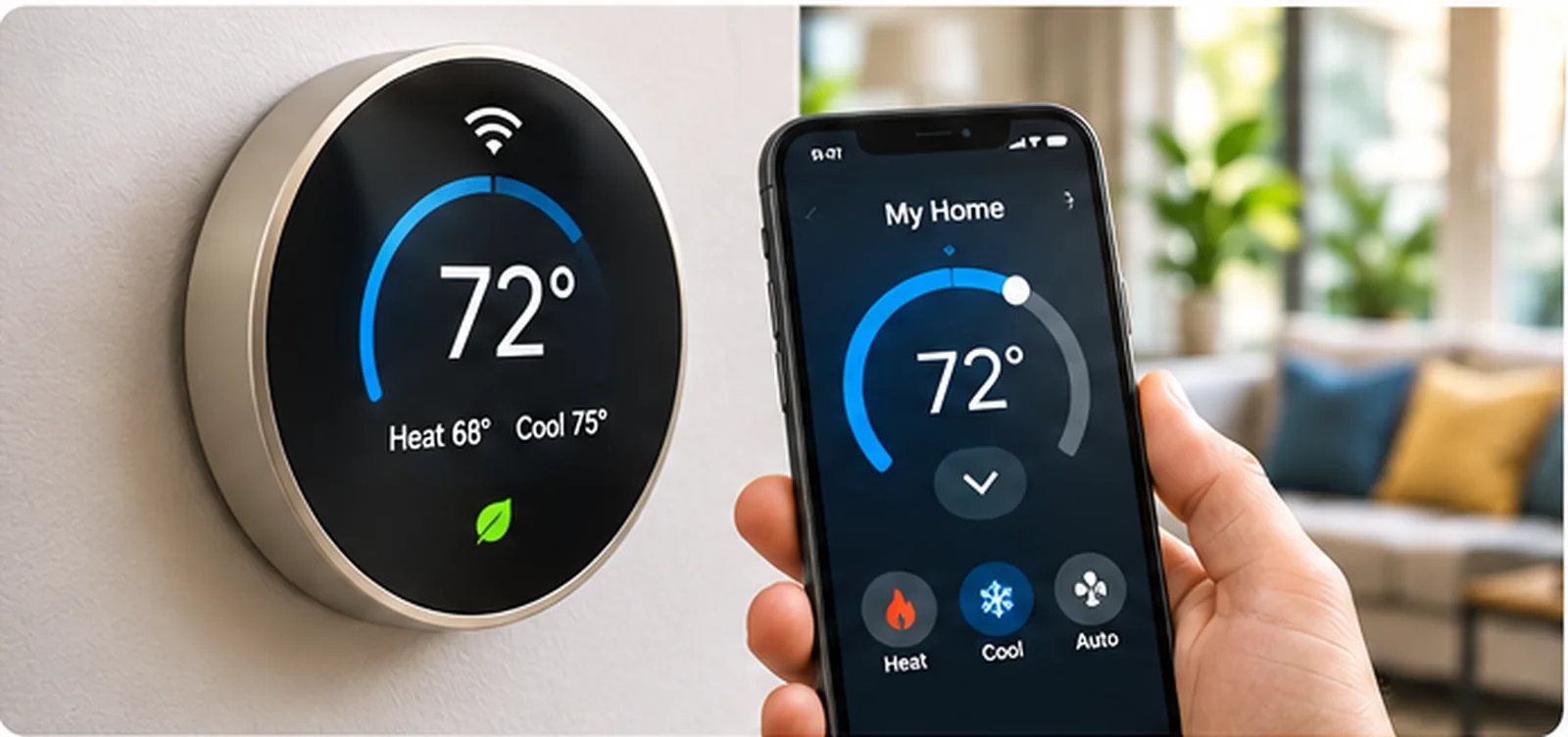
Imagine being told that you need to replace your entire furnace or air handler just to change your home’s temperature from a phone. For many homeowners, that would be an expensive way to gain a feature that may be available through a compatible thermostat upgrade.
At Emergency Repair, we believe you should understand your options before investing in new equipment. The age of your furnace alone does not determine whether it can work with a smart thermostat. Its control system, wiring, and thermostat requirements matter much more.
How Does a Smart Thermostat Work?
A thermostat tells your heating and cooling equipment when to operate. On many conventional residential systems, it uses low-voltage control signals. A compatible Wi-Fi thermostat can add remote adjustments through a phone app, scheduling, and sometimes energy-use information or alerts.
These features usually come from the thermostat and its connectivity—not from replacing the furnace. However, internet access, a supported app, and compatible equipment are still required.
Can an Older Furnace or Air Handler Use a Smart Thermostat?
Often, yes. Many older systems with conventional 24-volt thermostat controls can operate with modern Wi-Fi thermostats. But not every system uses conventional controls, and not every smart thermostat supports every equipment configuration.
Before buying a thermostat, identify the existing terminal connections and check the thermostat manufacturer’s compatibility requirements. A heat pump, multi-stage system, zoned system, or proprietary communicating system may have different needs from a basic furnace-and-air-conditioner combination.
Four Wires, Five Wires, and the Missing C-Wire
For a common conventional 24-volt heating-and-cooling system, the thermostat may have four connected terminals: R (24-volt supply), W (heat call), Y (cooling call), and G (indoor fan call). A five-wire setup may add C, the common side of the transformer, which allows many Wi-Fi thermostats to receive continuous power.
Example: Four-wire thermostat
PowerW
HeatY
CoolG
Fan
No dedicated C terminal shown at the thermostat.
Example: Five-wire thermostat
PowerW
HeatY
CoolG
FanC
Common
Includes a dedicated common connection.
Important: These are simplified examples, not installation instructions. Wire colors are not reliable identifiers, terminal functions vary, and some four-wire systems already use C in place of another function. Never assume compatibility from wire count or color alone.
A missing C-wire is a thermostat power-supply issue—not proof that your furnace is obsolete. Depending on the system, options may include using an unused conductor in the existing cable, installing new thermostat cable, adding a manufacturer-approved power accessory, or choosing a thermostat that supports the installation without a dedicated C-wire.
What If My System Has Advanced or Proprietary Controls?
Some communicating, variable-capacity, multi-stage, or zoned HVAC systems need a particular thermostat or interface to preserve their full functionality. A generic smart thermostat may provide basic heating and cooling control but could lose advanced diagnostics, modulation, humidity functions, or other equipment-specific features. In some cases, it may not be compatible at all.
That is why remote phone control and full control of every advanced equipment feature are not the same thing. A technician should review the actual equipment model and control board before recommending a replacement thermostat.
When Is Replacing the Furnace Actually Necessary?
Replacing a working furnace or air handler solely because you want phone-based temperature control is usually not the first solution to consider. Equipment replacement may make sense for independent reasons, such as unsafe operation, a failed heat exchanger, costly recurring breakdowns, or a planned efficiency or comfort upgrade. Those decisions deserve their own evaluation.
When Should You Ask an HVAC Technician to Check Compatibility?
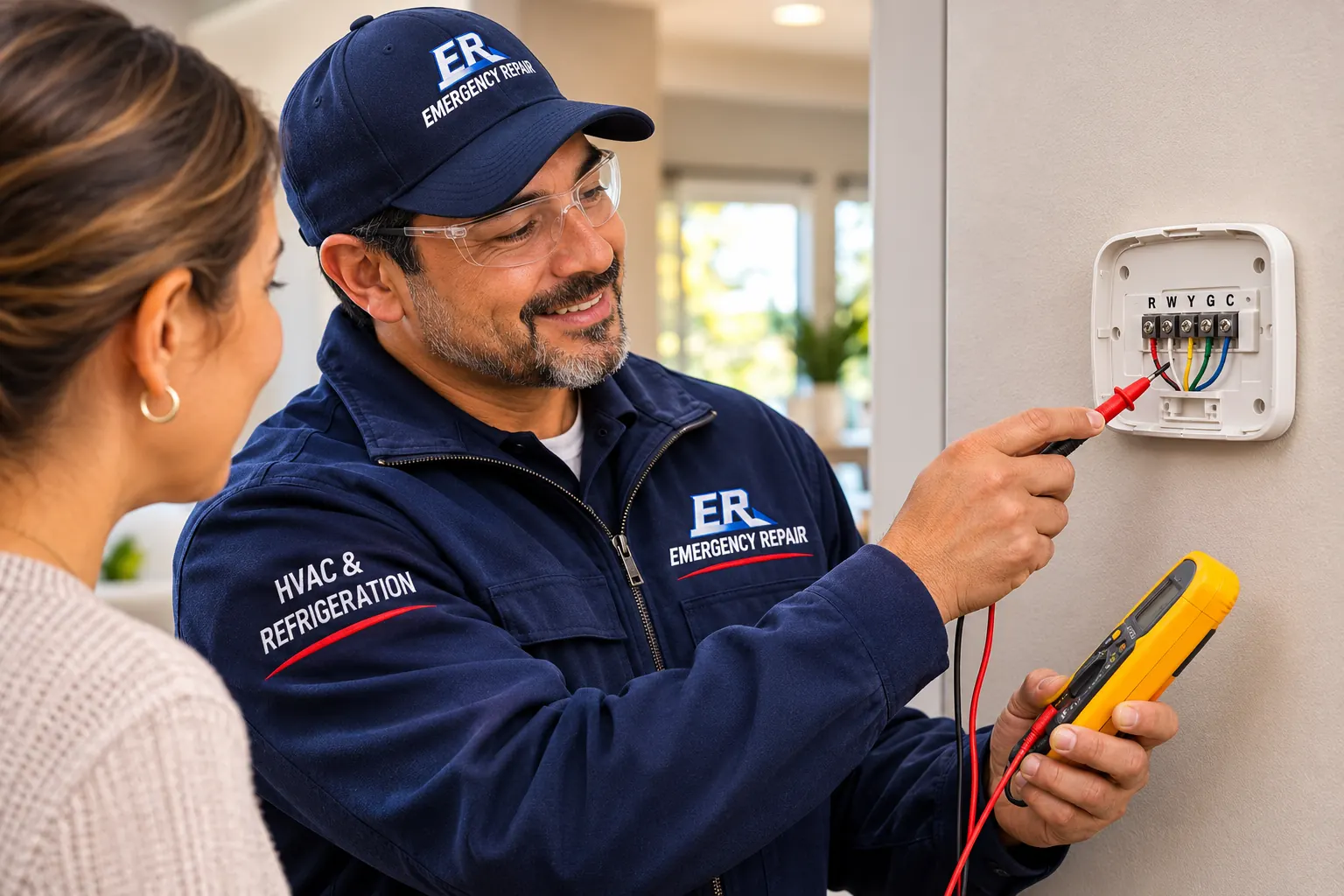
Ask for a professional assessment if you have no obvious C-wire, a heat pump, multiple heating or cooling stages, a communicating thermostat, or uncertain wiring. A qualified technician can confirm the power supply, inspect the control terminals, identify any needed accessory, and explain what features a proposed thermostat will—or will not—support.
Safety note: Turn off HVAC power before any thermostat wiring is touched. Incorrect low-voltage connections can damage controls; some thermostats also use line voltage. If you are unsure of the system type, do not remove or reconnect wires yourself.
Frequently Asked Questions
Can a 20-year-old furnace work with a smart thermostat?
Possibly. Age alone does not rule it out. Compatibility depends on the controls, wiring, power requirements, and thermostat model.
Does every Wi-Fi thermostat need a C-wire?
No. Requirements differ. Some use alternative power methods or approved adapters, while many require a dedicated common connection.
Will a smart thermostat make my old furnace more efficient?
It may help reduce unnecessary run time through scheduling or setbacks, but it does not change the furnace’s underlying combustion efficiency or repair mechanical problems. Savings depend on use and the home.
Do I need to replace the air handler to use an app?
Not necessarily. Many existing air handlers can work with compatible smart thermostats. Communicating and specialized systems need closer review.
Get the Right Advice Before Replacing Your Equipment
Want to control your home's temperature from your phone? Emergency Repair can evaluate your existing thermostat and HVAC controls and help identify practical options.