Updated: 2026-10-28
Ceiling Fan Direction: A Simple Change for Better Comfort in Summer and Winter
That small reverse switch on your ceiling fan has a purpose—and the right setting changes with the season.
When Utah temperatures swing from hot summer afternoons to cold winter nights, homeowners naturally look for ways to stay comfortable without unnecessarily increasing their heating and cooling bills. One useful tool may already be hanging above your living room: the ceiling fan.
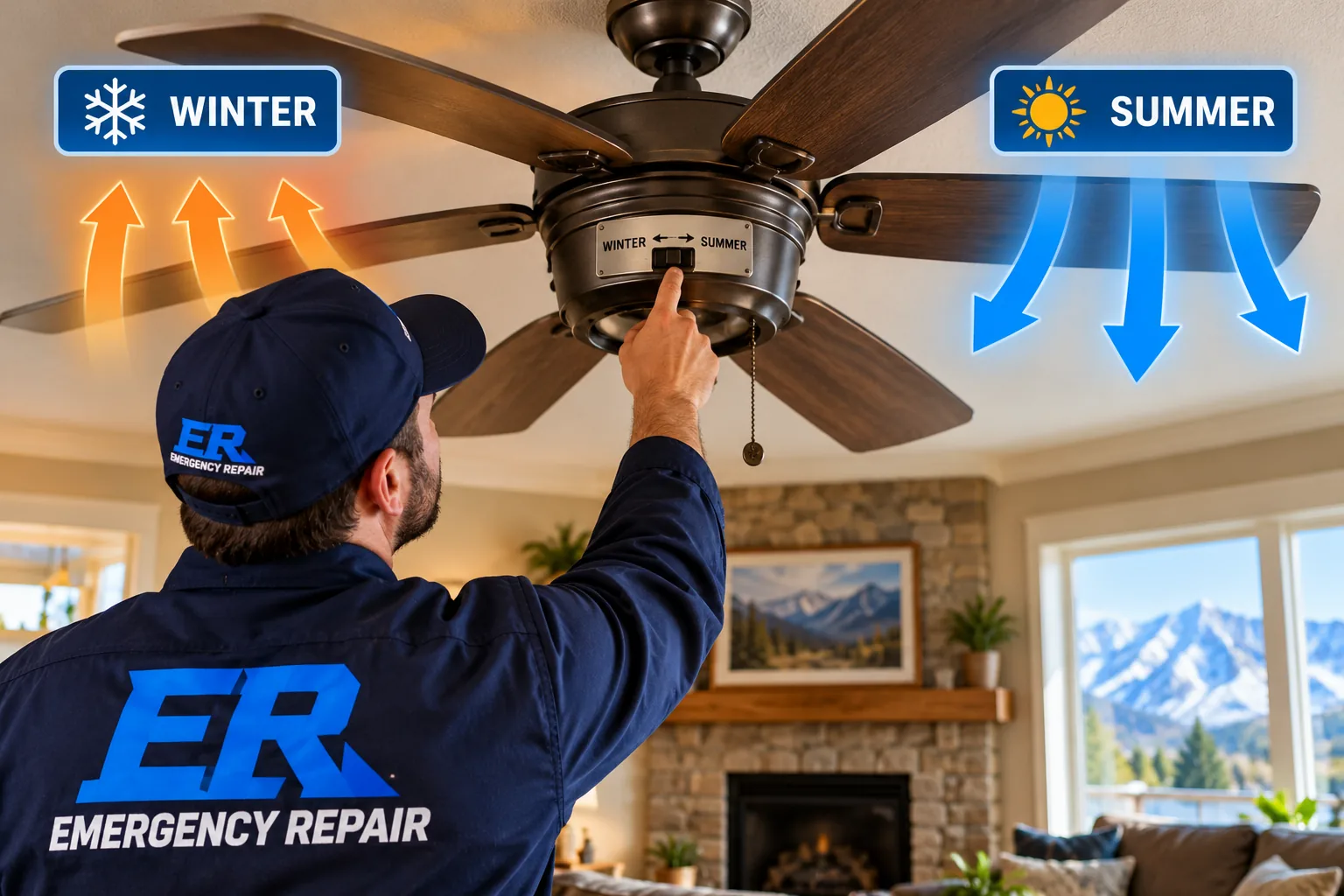
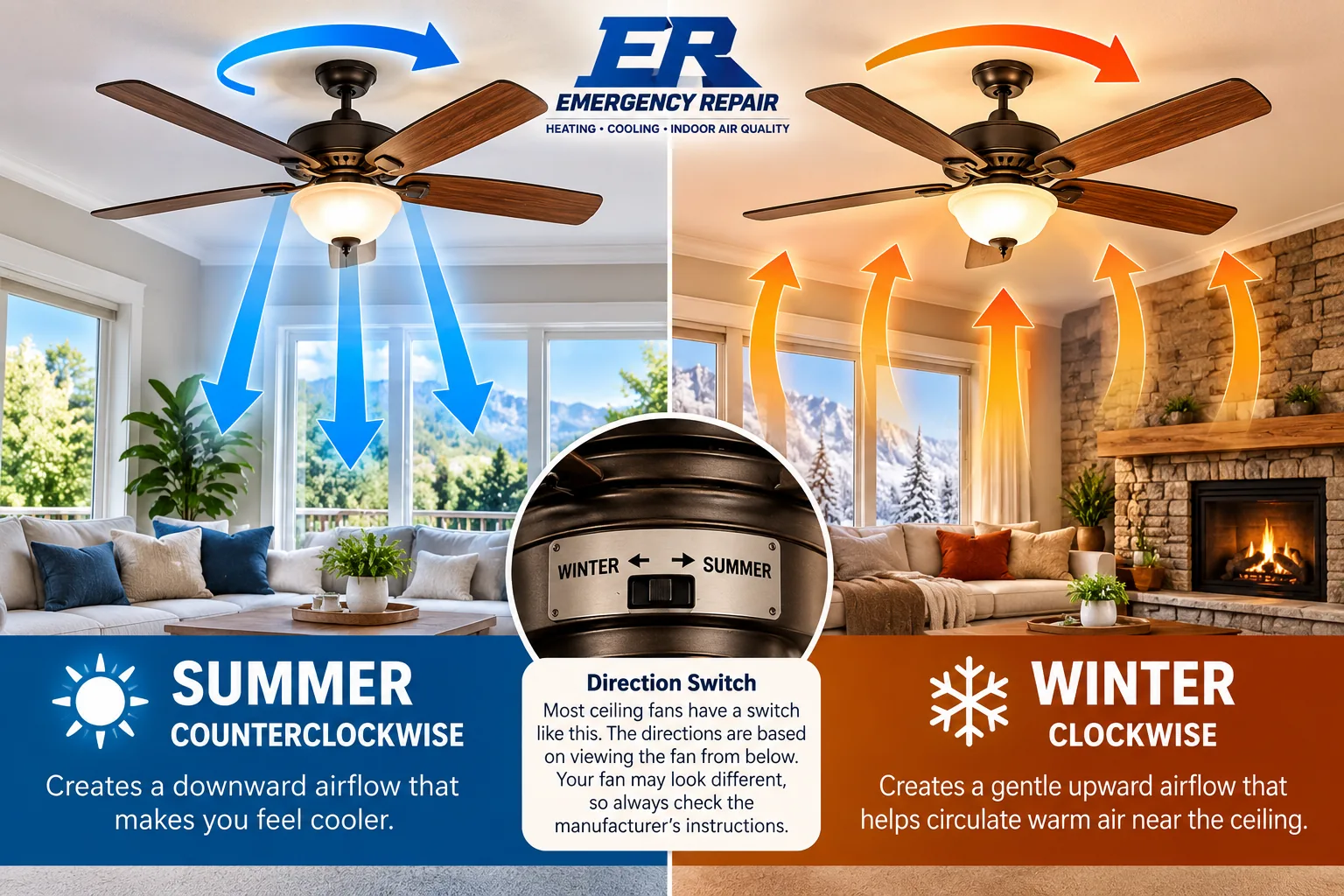
Many ceiling fans have a switch or remote setting that reverses the direction of the blades. The common recommendation is counterclockwise in summer and clockwise in winter, when viewed from below. But understanding why matters more than memorizing the direction.
First, What Does a Ceiling Fan Actually Do?
A ceiling fan does not lower the room's air temperature the way an air conditioner does, and it does not create heat the way a furnace does. Instead, it moves air. That movement changes how comfortable people feel and how air is distributed within a room.
In summer, moving air across your skin helps sweat evaporate and increases heat loss, so you can feel cooler even though the thermostat reads the same temperature. In winter, gentle circulation can reduce the temperature difference between warmer air near the ceiling and cooler air near the floor.
Summer: Counterclockwise for a Cooling Breeze
For most conventional ceiling fans, counterclockwise rotation—viewed from below—pushes air downward. This creates a breeze you can feel while sitting or standing beneath the fan.
Because the breeze makes occupied spaces feel cooler, you may be comfortable setting the air-conditioning thermostat a little higher. That thermostat adjustment, rather than the fan alone, is what can reduce air-conditioning energy use.
How to check the summer setting
- Stand or sit beneath the running fan.
- Use a comfortable speed and check for a noticeable downward breeze.
- If the fan has a reverse control and you feel little airflow, turn it off, wait until the blades stop, and try the other direction according to the manufacturer's instructions.
Winter: Clockwise at Low Speed to Redistribute Warm Air
Warm air tends to collect near the ceiling, especially in rooms with high ceilings. In many traditional fan designs, clockwise rotation at a low speed pulls air upward through the center of the fan and gently moves it outward and down along the walls.
This circulation can help mix the room's air without creating the strong downward breeze you would want in summer. A room with less temperature stratification may feel more even from floor to ceiling.
Keep the fan on low. A strong draft can make occupants feel colder, defeating the purpose. If you notice a chilly breeze, reduce the speed or turn the fan off.
Winter fan use does not guarantee a lower heating bill. Any savings depend on the room, ceiling height, thermostat setting, heating system, and electricity consumed by the fan.
How to Reverse Your Ceiling Fan Safely
- Turn the fan off and wait for the blades to come to a complete stop.
- Find the reverse control. Depending on the model, it may be a small switch on the motor housing, a button on the remote, or a setting in a wall controller or app.
- Change the direction according to the manufacturer's instructions. Do not reach toward moving blades.
- Restart the fan and verify the airflow. Use a stronger downward breeze in summer and gentle, draft-free circulation in winter.
If the switch is out of reach, use a stable, appropriate ladder or ask for assistance. Do not stand on furniture to reach the fan.
Does Reversing the Fan Really Save Energy?
It can support energy savings, but it is not a substitute for an efficient heating or cooling system. In summer, the biggest opportunity is to use the breeze to remain comfortable at a slightly higher thermostat setting. In winter, gentle mixing may improve comfort in rooms where warm air collects overhead, but results vary.
A ceiling fan also consumes electricity. Running it continuously without improving comfort or changing how the HVAC system operates may increase—not decrease—total energy use.
Other Ways to Help Your HVAC System Work Efficiently
- Replace or clean HVAC filters according to your equipment's requirements.
- Keep supply registers and return-air openings unobstructed.
- Use thermostat settings that balance comfort and energy use.
- Seal obvious air leaks and evaluate insulation where needed.
- Schedule maintenance if heating or cooling performance has changed.
For more guidance, explore our residential HVAC maintenance services and indoor air quality services.
Frequently Asked Questions
Which direction should my ceiling fan turn in summer?
Usually counterclockwise when viewed from below. The important result is a downward breeze that helps people feel cooler.
Which direction should it turn in winter?
Usually clockwise on low speed, to circulate warm ceiling air with minimal draft. Confirm the airflow because designs vary.
Can a ceiling fan lower the temperature in my room?
No. It moves air and can change how cool you feel, but it does not refrigerate the air.
Should I leave the fan running all day?
In summer, switch it off when the room is empty because its cooling benefit is primarily felt by people. In winter, use it only when the improved air circulation justifies the electricity it consumes.
What if my fan doesn't have a reverse switch?
Check the owner's manual. Some fans reverse through a remote or wall control, while other models do not offer reverse operation.
Comfort Starts With Good Airflow
A seasonal fan adjustment is a useful comfort habit, but it cannot correct a furnace or air conditioner that is struggling to heat or cool your home. If you notice uneven temperatures, weak airflow, or rising utility bills, Emergency Repair can help evaluate your HVAC system.
We serve Sandy, Salt Lake City, Draper, and surrounding Northern Utah communities.
Emergency Repair
Your Comfort Is Our Business.