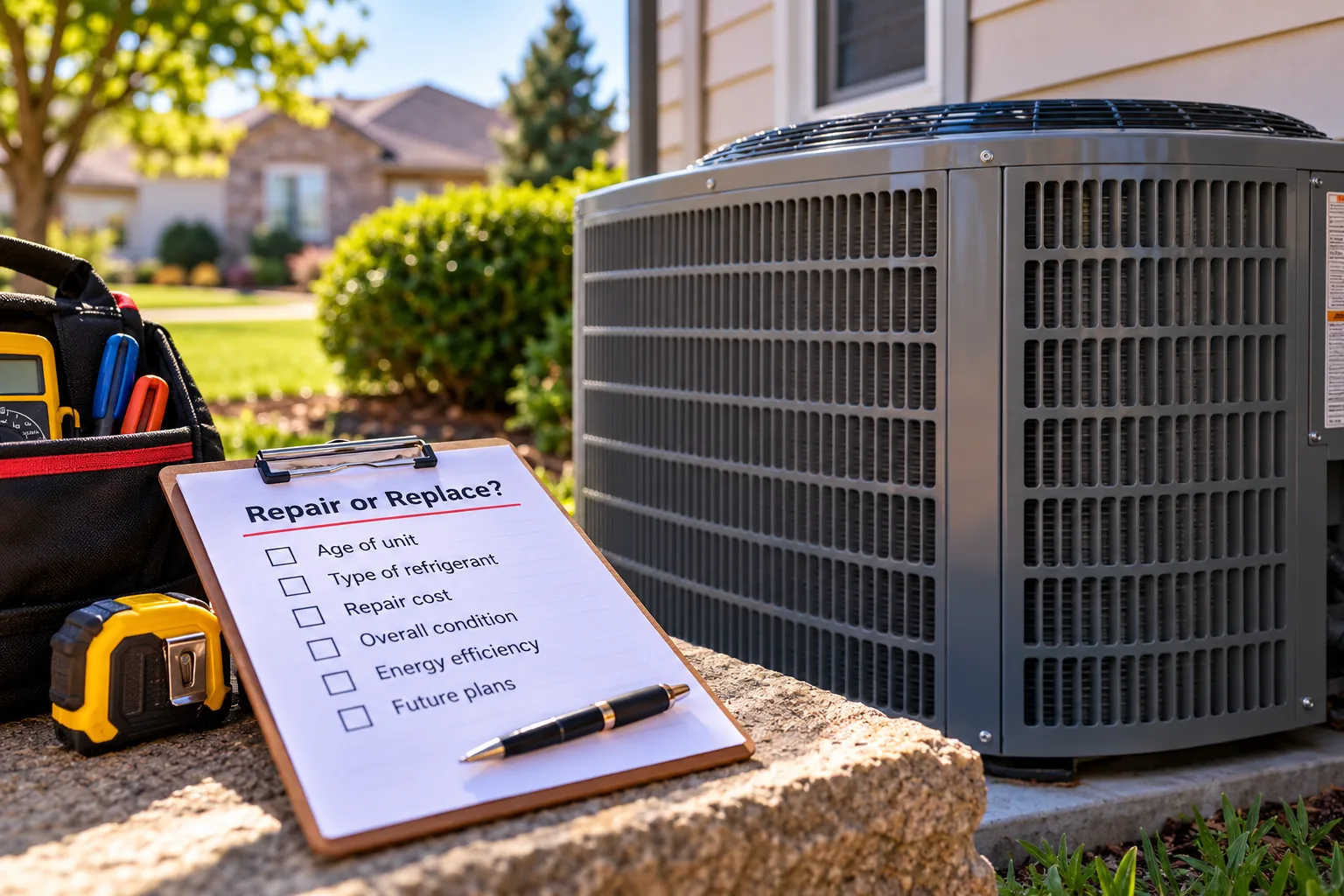
Updated: 2026-10-09 · Emergency Repair · Homeowner education
Should I Replace My Air Conditioner?
What Every Homeowner Should Know Before Spending Thousands
An informed homeowner is an empowered homeowner. Before replacing your air conditioner, understand what you have, what has failed, and what your options really are.
Imagine your AC stops cooling in the middle of summer. You call for a repair, but a technician recommends replacing the entire system. Is that necessary? Can it be repaired? Is age the deciding factor? Every homeowner deserves clear answers before committing to an expensive replacement.
At Emergency Repair, we believe customers should understand the diagnosis, available options, and costs before making that decision.
How long should an air conditioner last?
A useful planning estimate for central air conditioners is approximately 15–20 years, although service life varies. Installation quality, maintenance, operating hours, climate, and repair history all matter. ENERGY STAR suggests considering replacement for equipment over 10 years old, especially if it performs poorly or needs frequent repairs.
Age alone does not prove failure. A well-maintained older unit may still provide dependable cooling, while a newer system can have significant problems.
Buying a used home? Inspect the air conditioner
When buying a home, an air conditioner that runs today can still represent a substantial future expense. At 12 years or older, we recommend a closer look—not automatic replacement. This is our planning recommendation, not a legal or universal technical threshold.
- Request an HVAC-specific inspection and available maintenance records.
- Ask for the installation date, model and serial number, and refrigerant type.
- Review performance, repair history, and any warranty coverage.
- Budget for eventual replacement and discuss findings during negotiations if appropriate.
A general home inspection may not include comprehensive HVAC diagnostic testing.
My AC is not cooling. Must I replace it?
No. Poor cooling may be caused by a dirty filter, failed capacitor or contactor, thermostat problem, restricted airflow, dirty coils, failed fan motor, electrical fault, or a refrigerant leak. These problems are not equivalent to a failed compressor.
A low refrigerant reading is a finding to investigate—not, by itself, proof that the entire system needs replacement. A qualified technician should identify the cause, explain the tests performed, and present repair options.
What about major component failures?
A compressor, condenser coil, or evaporator coil failure can make repairs expensive. A metering device failure may also require specialized service, but does not automatically justify a complete system replacement.
Even major components can sometimes be replaced. The decision depends on age, system condition, compatible parts, refrigerant, warranty coverage, labor, and total repair cost. A major failure in a 19-year-old system presents a different financial decision from a minor electrical repair in a six-year-old system.
What is R-22, and is it illegal?
R-22 and HCFC-22 are the same refrigerant. HCFC stands for hydrochlorofluorocarbon. R-22 contains chlorine and is an ozone-depleting substance; refrigerant releases can harm the stratospheric ozone layer. R-22 is also a greenhouse gas.
Federal production and importation of newly produced R-22 ended in 2020. Existing R-22 air conditioners are not illegal to own or operate. Existing systems can still be serviced using legally available supplies such as recovered or reclaimed refrigerant, subject to applicable rules.
Nor does a compressor or coil failure automatically create a legal requirement to replace the entire system. Compatible parts and refrigerant may be costly or difficult to source, so replacement can be economically preferable. Economic judgment and legal requirements are different things.
How to find your air conditioner’s refrigerant
Look for the manufacturer’s data plate on the outside of the outdoor condensing unit. Read the refrigerant designation and factory charge, and note the model number. If the label is damaged, the manufacturer or a qualified technician may be able to identify the original specification from the model number.
Do not remove service panels, connect gauges, or operate refrigerant valves. Reading an accessible external label is enough for this homeowner check.
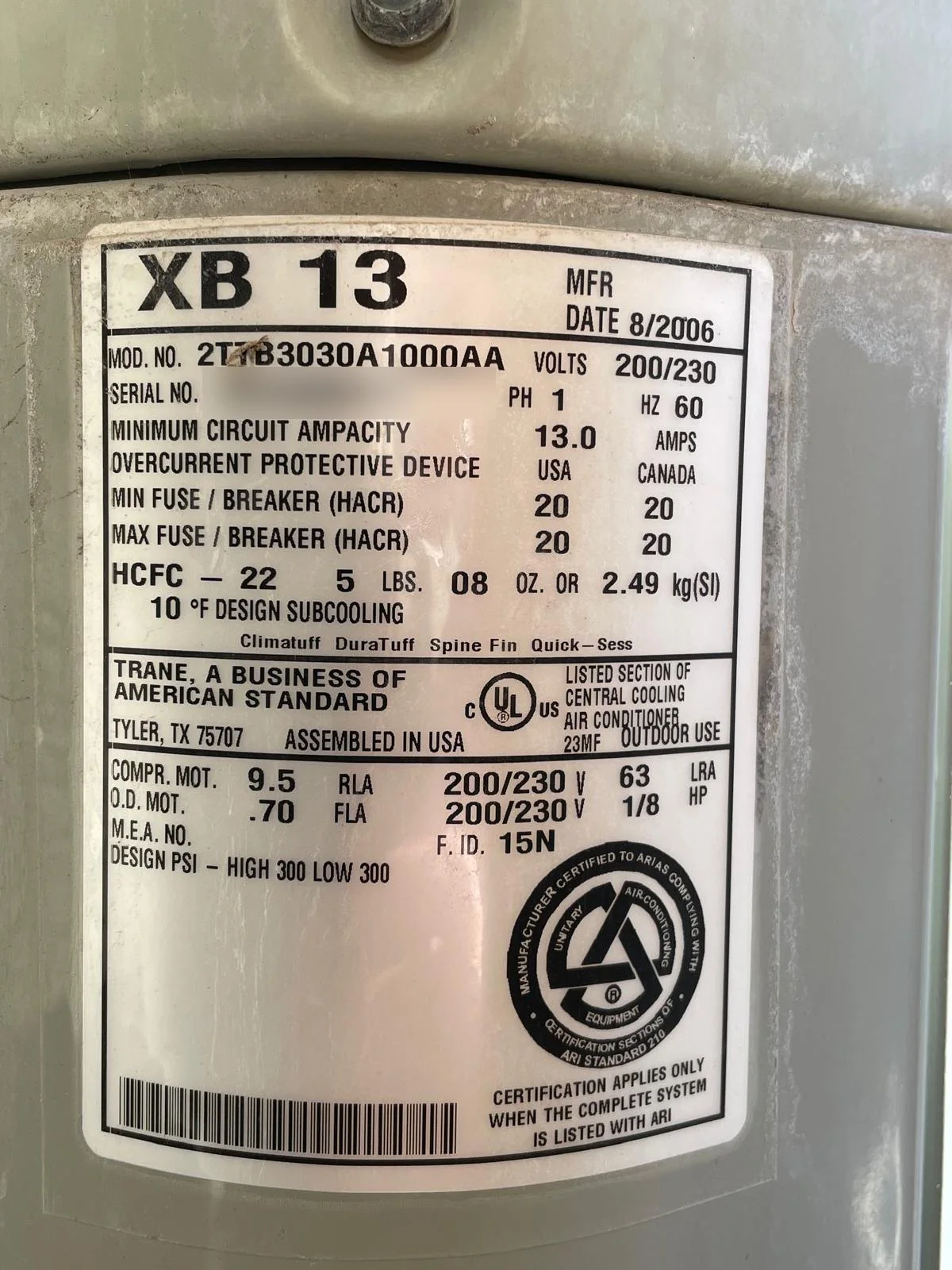
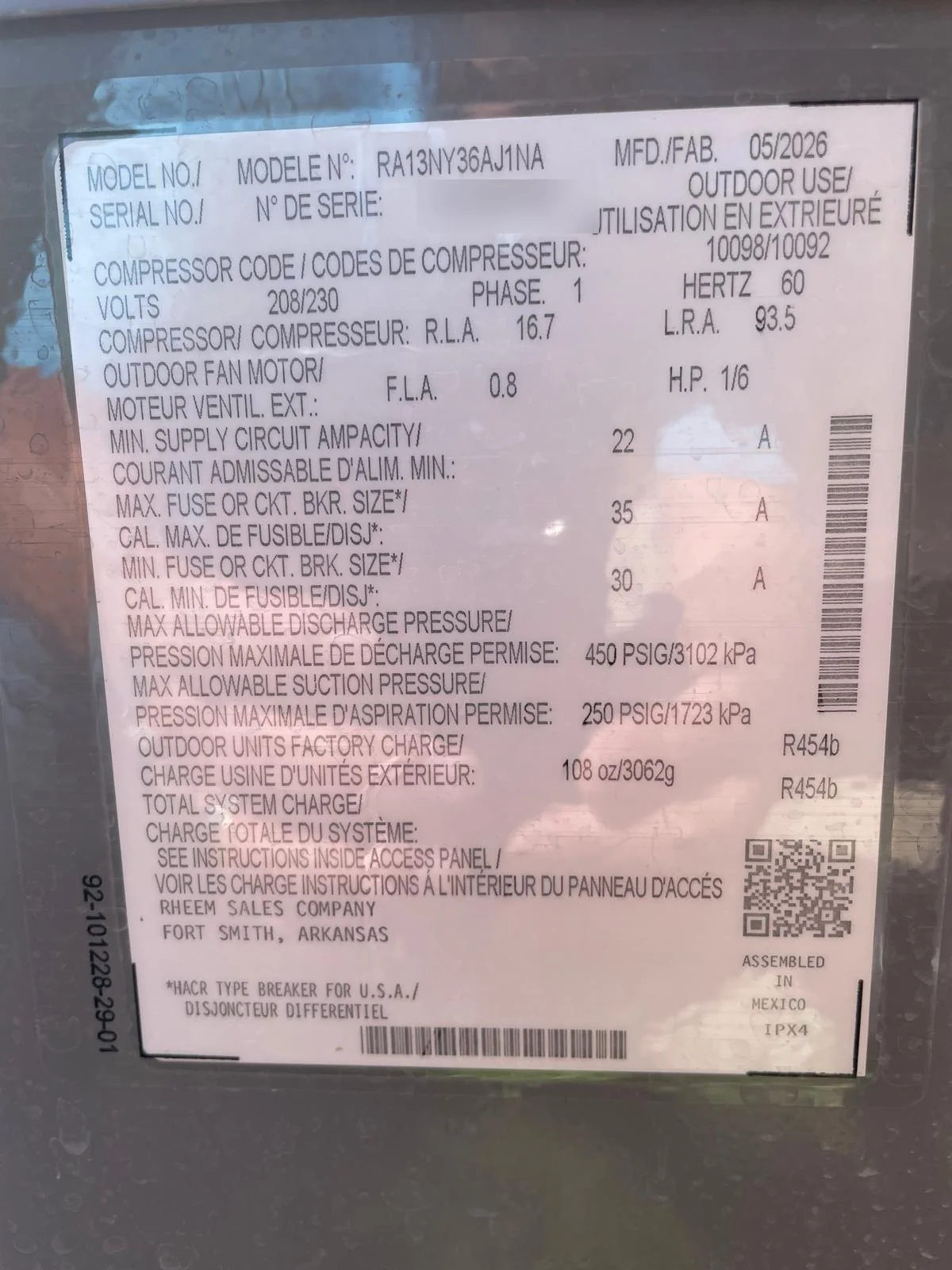
Important: The factory charge is the amount supplied with the outdoor unit, not necessarily the final installed system charge or the quantity currently remaining. Installed charge depends on the equipment combination, line length, and manufacturer instructions.
Can R-22 simply be replaced with another refrigerant?
There is no universally interchangeable, true “drop-in” replacement for R-22. Equipment is designed around refrigerant characteristics, compressor and lubricant compatibility, operating conditions, metering devices, and safety requirements.
Some refrigerant retrofits are technically possible when an approved alternative is suitable and the conversion follows the applicable instructions. A correctly engineered retrofit is not automatically temporary. However, refrigerants must never be mixed or substituted merely because a seller describes them as compatible.
Newer A2L refrigerants such as R-454B have additional safety considerations and must not be put into older systems not designed and approved for them. Refrigerant handling belongs with appropriately certified technicians.
Does the refrigerant transition make R-410A systems illegal?
No. R-410A does not deplete ozone, but its global warming potential has led to federal restrictions affecting certain new equipment. Those requirements are not a blanket order to replace existing R-410A air conditioners. Existing equipment can generally continue operating and be serviced with compatible refrigerant and parts, subject to applicable regulations.
Rules for manufacturing, selling, and installing new systems have transition provisions; do not confuse them with rules for maintaining equipment already installed.
Repair or replace: examine the whole financial picture
Consider the repair estimate, equipment age and condition, warranty, past failures, compatible parts, refrigerant availability, expected future repairs, and how long you plan to remain in the home.
A new system can lower cooling electricity consumption, but savings depend on the old and new efficiency ratings, local electricity prices, climate, usage, airflow, and installation quality. Ask for a realistic estimate rather than a guaranteed payback claim. Correct equipment sizing and installation matter as much as advertised efficiency.
Why a second opinion can be valuable
Replacing an air conditioner can cost thousands of dollars. When the diagnosis is unclear or the proposed work is substantial, a second opinion from an independent qualified HVAC contractor is a reasonable consumer decision—not an accusation of dishonesty.
Ask: What component failed? What tests support that diagnosis? Is repair possible? What does it cost? What warranty applies? How would replacement improve reliability, comfort, or operating cost? Can I receive the findings and estimate in writing?
Most HVAC professionals aim to provide ethical, skilled service. A homeowner should nevertheless seek clarification if someone claims an older unit must be replaced solely due to age, says all R-22 equipment is illegal, or insists that an existing R-410A system cannot be repaired.
Maintenance can help protect your investment
Keep outdoor units clear of debris, maintain filters, and schedule appropriate professional maintenance. Technicians can assess airflow, coils, electrical components, and refrigerant system performance. Maintenance cannot prevent every failure, but it can reduce avoidable problems and help reveal developing issues before they become expensive.
Final thoughts: knowledge, not pressure
There is no single age, refrigerant type, or repair price that automatically determines whether every air conditioner must be replaced. An older R-22 unit may still operate legally, and a newer system may have a repairable problem. The right choice starts with a proper diagnosis and an honest discussion of costs and alternatives.
Before spending thousands on a replacement, make sure you understand why it is being recommended. When appropriate, seek a second opinion.
Emergency Repair provides heating, cooling, and indoor air quality services in Sandy, Draper, Salt Lake City, and surrounding Utah communities. Visit Emergency Repair to learn more.
References and further reading
- EPA: Homeowners and Consumers — Frequently Asked Questions
- EPA: Technicians and Contractors — Frequent Questions
- EPA: Purchasing and Repairing Home Air Conditioners or Heat Pumps
- EPA: HFC Technology Transitions
- ENERGY STAR: When Is It Time to Replace?
- ENERGY STAR: Maintenance Checklist
- DOE: Purchasing Energy-Efficient Residential Central Air Conditioners
Regulations and manufacturer specifications may change. Verify current requirements before making equipment-specific decisions. This article is educational and is not a substitute for an on-site professional diagnosis.