Updated: 2026-10-20
HVAC Emergency Guide: What Utah Homeowners Should Do Before Calling for Service
A furnace that stops heating during a Utah cold snap or an air conditioner that fails in extreme heat can be stressful. Knowing what to do first can help protect your household and make the service call more productive.
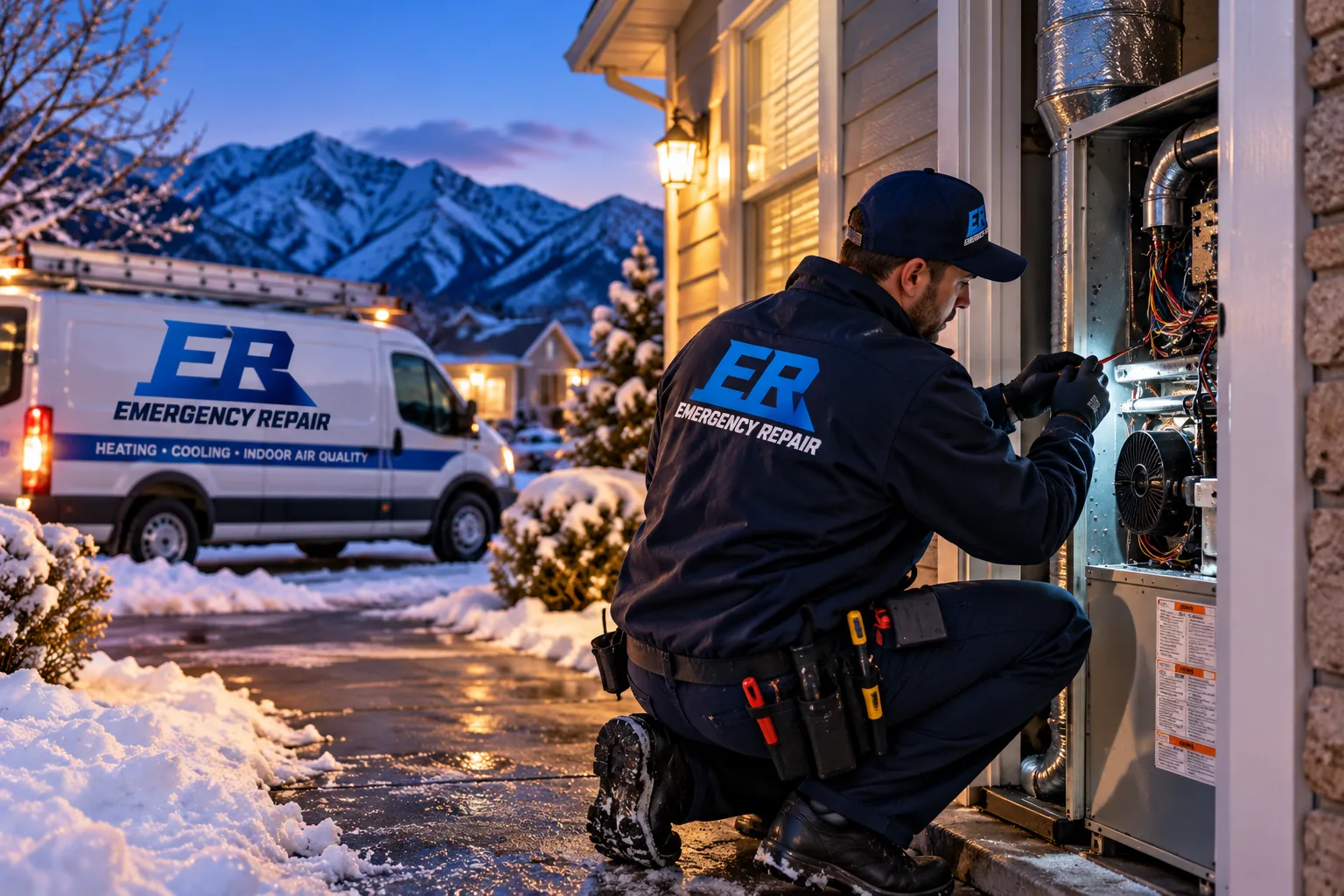
Emergency Repair helps homeowners in Sandy, Salt Lake City, and surrounding Utah communities with residential heating and cooling problems. We accept emergency calls 24 hours a day, seven days a week; technician availability and appointment times must be confirmed when you call.
First: Recognize a Safety Emergency
Smoke, sparks, burning odors, or exposed electrical components are also reasons to stay away from the equipment and seek appropriate emergency assistance. Do not open electrical panels or attempt wiring repairs.
When Is an HVAC Problem Urgent?
No heat during freezing weather
Loss of heat can become especially concerning when temperatures fall below freezing, particularly in homes with infants, older adults, or people sensitive to temperature extremes. Contact us to discuss service availability. If indoor conditions become unsafe, relocate to a safe, heated place.
No cooling during extreme heat
During a heat wave, indoor temperatures can rise quickly. Seek a cooler location if anyone in the household is at risk of heat illness. If someone develops severe heat-related symptoms, seek emergency medical help.
Repeated shutdowns or unusual sounds
Frequent shutdowns, loud grinding noises, or a repeatedly tripping breaker may signal a problem that needs professional diagnosis. Turn the system off if safe to do so, and avoid repeated resets.
Simple Checks You Can Make Safely
If there is no gas odor, smoke, electrical hazard, or other immediate danger, a few basic checks may help you describe the issue when you call:
- Thermostat: Confirm that it is set to the intended heating or cooling mode and that the requested temperature makes sense.
- Air filter: If the filter is readily accessible and safe to inspect, check whether it is heavily clogged.
- Supply and return vents: Make sure furniture or other objects are not blocking airflow.
- Visible conditions: Note unusual noises, error messages, or water around the unit without removing covers or touching electrical components.
Do not bypass safety switches, handle refrigerant, open electrical compartments, or repeatedly reset tripped breakers. If you are unsure whether a check is safe, leave it to a technician.
What to Tell the Technician When You Call
Have your service address ready and describe whether the system is not heating, not cooling, leaking water, making noise, or shutting down. If possible, mention when the problem began, any thermostat messages, and whether the equipment is a furnace, air conditioner, or heat pump. You do not need to diagnose the problem yourself.
Emergency Repair accepts calls 24/7. We will discuss available appointments and next steps. An after-hours diagnostic fee of $150 applies when an after-hours appointment is requested; repair costs, if any, are discussed separately.
Learn more about Residential Emergency After-Hours HVAC Service →
Can Regular Maintenance Help Prevent Emergencies?
Not every breakdown is preventable, but seasonal maintenance can identify worn components, airflow restrictions, and performance concerns before they lead to unexpected interruptions. Schedule furnace service ahead of winter and air conditioning maintenance before the hottest months when practical.
Frequently Asked Questions
Does a 24/7 emergency phone line mean a technician can arrive immediately?
No. We accept emergency calls around the clock, but appointment and dispatch availability must be confirmed. We do not promise a fixed arrival time.
Should I keep resetting a breaker if my air conditioner will not start?
No. A breaker that trips repeatedly can indicate an electrical fault. Leave the system off and request professional evaluation.
What should I do if my carbon monoxide alarm sounds?
Evacuate immediately and contact emergency services from outside. Do not reenter until emergency responders say it is safe.
Need Help With a Heating or Cooling Problem?
Call Emergency Repair to describe the issue and ask about available residential HVAC service in the Salt Lake City area.
Call (385) 484-8472